Congratulations!
If you’re here, it means you’re ready to do this the right way — and that already puts you ahead.
Read the 5 step startup and take a look at the prompts to get you started!


Start Here: The 5-Step Startup System
Starting a business can feel confusing. There’s a lot of advice, a lot of opinions, and a lot of steps. This guide breaks it down into five simple stages so you can move forward one step at a time. We use AI as a tool to help you think clearly — not to replace your thinking.
Step 2: Define Your Customer and Offer
A real business isn’t for “everyone.” It’s for specific people. In this step, you figure out who your customer is and what you’re actually selling them.
Example Prompt:
“Create two customer profiles for this business: [describe business]. Include their needs, goals, and challenges.”


Step 1: Get Clear on Your Idea



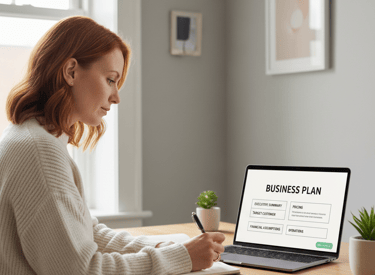


You don’t have to guess your way through a business plan. We show you how to use simple prompts to create each section clearly and in plain language.
Example Prompt:
“Create a simple business plan outline for this business: [describe]. Include summary, target customer, pricing, operations, and basic financial assumptions.”
You don’t need to be a math expert, but you do need to understand your costs and what it will take to stay open. This step helps you look at your numbers honestly.
Example Prompt:
“Help me estimate startup costs and create a basic 12-month income and expense projection.”
Step 3: Build Your Business Plan Using AI
Step 4: Understand Your Cost
Before you build anything, slow down and make sure your idea makes sense. What problem are you solving? Who are you helping? Why would someone pay for this?
Example Prompt:
“Act as a startup advisor. Ask me 10 clear questions about this business idea: [describe idea].”
Step 5: Get Ready to Launch


Now it’s time to move. We turn your plan into clear action steps so you know exactly what to do next.
Example Prompt:
“Create a simple 14-day launch checklist for this business.”
Choose Your Business Structure
Before you officially launch, you need to decide how your business will be set up legally. This affects your taxes, paperwork, and how protected you are if something goes wrong.
Here are the basic options explained simply:
Sole Proprietor
This is the simplest way to start.
You and your business are legally the same. There’s no separation between your personal money and your business money.
It’s easy and low-cost to start.
But if your business has debt or gets sued, your personal assets (like your car or savings) could be at risk.
DBA (Doing Business As)
A DBA is just a registered business name.
For example, if your name is Sarah Johnson but you want to call your business “Sweet Treats Bakery,” you would register a DBA.
Important:
A DBA does NOT protect your personal assets. It’s just a name registration.
LLC (Limited Liability Company)
An LLC separates you from your business legally.
This means your personal money and property are usually protected if the business has debt or legal issues.
Many small business owners choose an LLC because it offers more protection while still being fairly simple to manage.
Corporation
A corporation is more complex.
It’s usually used by larger businesses or companies planning to grow big, bring in investors, or issue stock.
It has more rules, more paperwork, and more formal structure.
Simple Advice
If you’re just starting out and testing an idea, many people begin as a Sole Proprietor.
If you want more protection for your personal assets, an LLC is often a common choice for small business owners.
No matter what you choose, it’s smart to check your state’s rules or speak with a professional if you’re unsure.
How to Ask AI About Your Business Structure
You can use AI to help you think through your options.
Example Prompt:
“Act as a small business advisor. Based on this business idea: [describe your business], explain whether a sole proprietorship or LLC might make sense. Keep the explanation simple and include pros and cons.”
This won’t replace professional advice, but it can help you understand your options before you make a decision.

The clear steps helped me break down my business idea without feeling overwhelmed.
Emily R.


Using AI prompts made writing my business plan approachable and actually enjoyable.
Mark T.

★★★★★
★★★★★
Let's Start Your Business With AI
Start Business AI provides practical, beginner-friendly guidance on how to use AI tools responsibly when starting and building a business. Clear steps. Real structure. No hype..
Contact HELLO@startbusinessai.com
© 2026 All rights reserved.